
MERGING OF CLUSTERS OF GALAXIES
Clusters of galaxies may “clash” and merge together to form a larger cluster, like Coma cluster for example. In Coma two clusters, formed from different streams of galaxies, encounter each other while moving from different directions and thus create a merging scenario resembling a “clashing” of clusters. Each individual cluster (one around Ngc 4874 and the other around Ngc 4889) is formed from cooling flow and ejection mechanisms. When the ejected material from each cluster “clash” with each other they create very hot inter-cluster material at the centre of the object where merging occurs. Like the examples in smaller scale, the cooler streams flow inward towards the merger centre and the highly turbulent churning at the centre throw material outward from the centre, which in turn returns back towards the centre. Such inflows and outflows form a universal mechanism of structure formation in larger and larger scales.
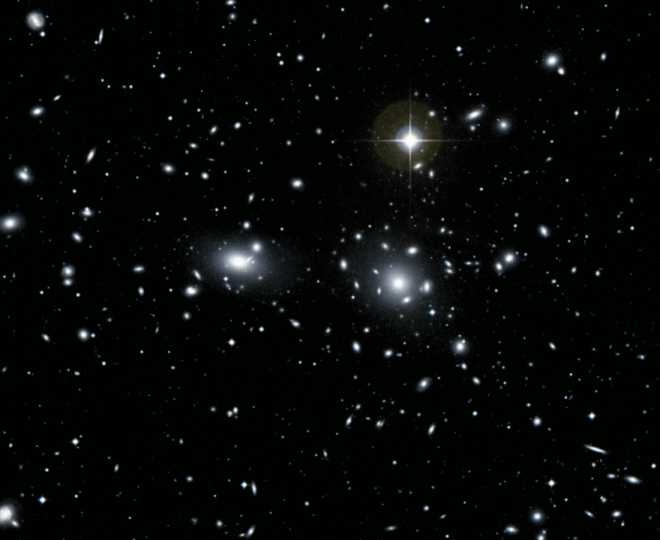
Coma cluster: Two clusters merging together to form a bigger cluster.
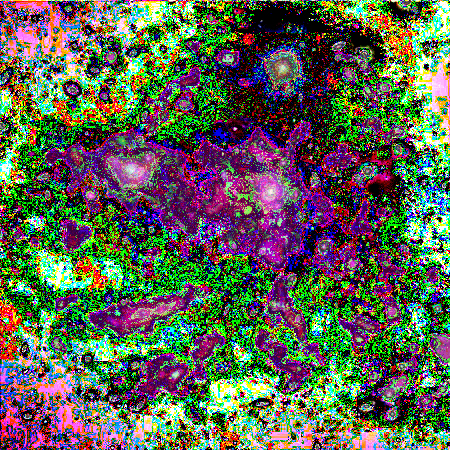
In the formation of Coma cluster by merging one galaxy cluster, moving from upper left, encounters the other galaxy cluster, which is being fed by streams flowing from below and moving upwards, encounter each other to create intense shocks which heat up the centre of the merged system emitting X-rays. The ejections from the left cluster towards the East meet ejections from the other which move toward west. The merging creates an ejection of smaller cluster moving downwards to the right corner below in the picture.
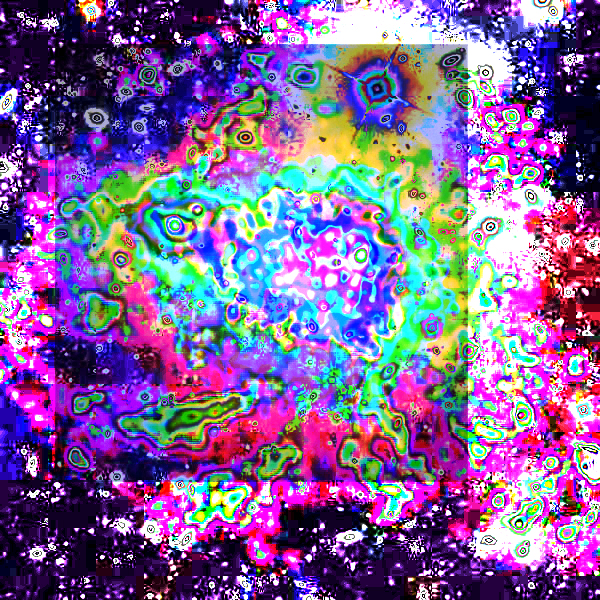
More detailed picture of how the galaxies move inward and flung outward to create a compact cluster.
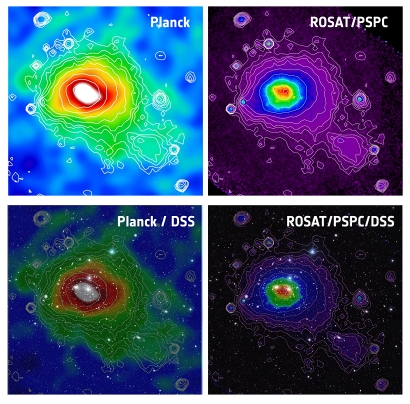
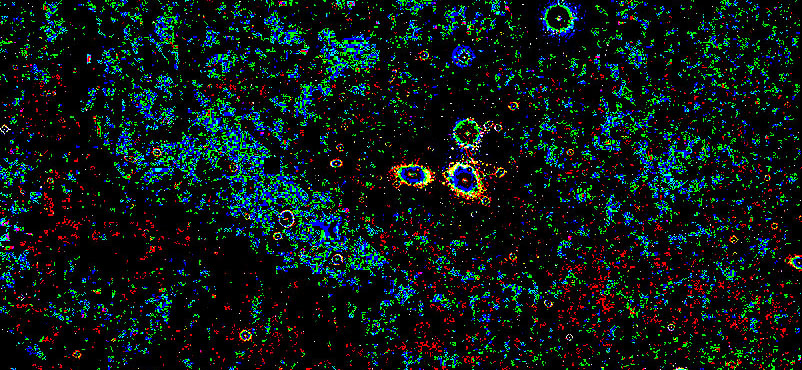
X-ray map of Coma clusters made by different satellite observations.
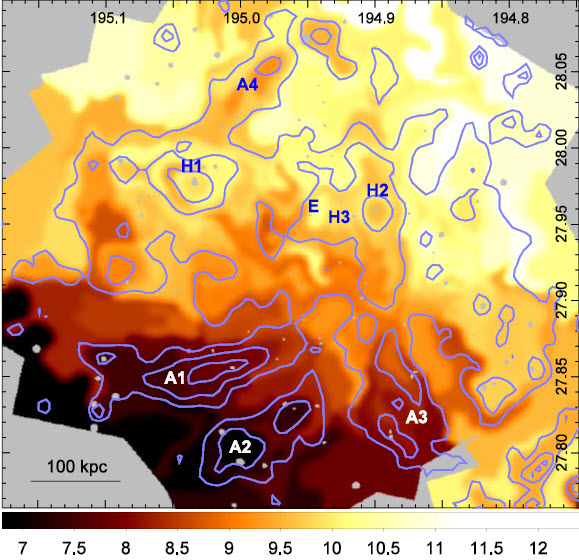
Temperature map of Coma cluster: Cooler streams from south-east and hotter ejections towards north-west.